If you’re steering a family operation through a farm tech transition and generational change, you’ve likely Googled some version of “How to Talk to Your Parents About Farm Tech (Without Starting a Fight).” The stakes are real: margins are tight and time is tighter, yet the dinner table conversation can get sensitive fast. This guide gives Australian farms a simple, respectful way to tackle resistance to new farm tech and move forward together. You’re not replacing hard won experience – you’re translating it into tools that protect margins, time, and the next generation’s future on the land.
Why the friction happens (and why it’s normal)
On many family farms, older operators are justifiably proud of systems that have worked for decades. Scepticism toward new tools – and the disruption they can bring – is common.
Most of the resistance isn’t about “hating technology”. It’s about managing risk.
• Pride in proven methods
“If it isn’t broken, why fix it?” isn’t stubbornness – it’s risk management from people who’ve ridden out droughts and price crashes.
• Hidden headaches
They’ve heard the horror stories: apps that don’t work without reception, messy data migration, logins no one remembers, “updates” that break everything.
• ROI anxiety
If it doesn’t clearly save time or money, it feels like a distraction – not a solution.
All of that is reasonable, and it points back to the goals everyone shares: efficiency, profitability and wise use of resources. Those are exactly the areas where modern platforms can help.
The F.A.R.M.E.R. plan (designed for real family farms)
F – Find common ground on outcomes
Start with a cuppa, not a subscription. These questions shift the conversation from tools to outcomes.
Ask questions like:
• “What would make this season easier?”
• “If we could cut our evening paperwork in half, what would we spend that time on?”
• “Which jobs go wrong when notes get lost – sprays, drenches, storage?”
Common answers:
• Less paperwork after dark.
• Tighter control on chemical, fertiliser, feed.
• Faster decisions from the tractor cab.
• Cleaner records for audits and succession.
Once you agree on outcomes, tech becomes a way to get there – not the argument.
A – Ask, don’t announce
Don’t show up saying, “I’ve signed us up for this new software.”
Instead, get them talking about pain points:
• Double entry between notebooks, whiteboards, spreadsheets, and accounting.
• Chasing up spray records, NLIS notes, or silo movements.
• Guessing what’s in each silo or paddock at any given time.
• Trying to remember what worked last season.
Listen more than you talk. That way you can connect features to what’s frustrating them and keep defences low from the start.
R – Run a small pilot (one paddock, one mob, one workflow)
Don’t “digitise the whole farm”. Prove it in something small and repetitive.
Example pilot:
1. Choose one job: this month’s pasture spray run or worm drenches.
2. Set a baseline:
• How long does it take now?
• How often do records go missing or get re typed?
3. Run the new process: log jobs on your phone in the paddock or yards (with offline mode), keep paper as backup if they want.
4. Compare:
• Time saved?
• Fewer mistakes?
• Clearer records for compliance?
Pilots help everyone evaluate with real data rather than gut feel.
M – Map the ROI in farm language
Pick two – three metrics you’ll track for at least 30 days (up to 6 – 12 weeks if they want more time to review):
• Admin time
Aim to cut repetitive paperwork (spray diaries, NLIS notes, silo logs) so evenings aren’t spent re typing.
• Inputs
Use better records and basic variable rate plans to trim fertiliser, chemical, water or feed wastage (even a few percent can matter).
• Throughput and Quality
Use yield and storage tracking to protect grain quality and reduce “mystery shrink”.
You could say something like:
“Let’s pick two metrics – time on paperwork and chemical usage – and check them after 8 weeks. If it isn’t helping, we stop.”
Now you’re all on the same page: the tech stays if the numbers stack up.
E – Equip the team (not just the software)
Pick tools that suit how you work:
• Phones first – easy to use in the cab, ute, or yards.
• Offline first – keeps working when reception drops, syncs later.
• Clean data migration – can import key spreadsheets and existing records.
• Central records – one place for crops, mobs, inputs, and yields.
Then make it easy to say “yes”:
• Train on tasks, not menus
“Here’s how you record a spray while you’re in the paddock.”
“Here’s how you log a drench while you’re in the yards.”
• Nominate a family ‘super user’
That’s probably you: the one who knows the system best, plus a direct line to vendor support.
• Document the fallback
Show exactly what happens when the internet drops and how it all syncs later. That’s a big trust builder.
Bring in trusted voices
Older operators often trust neighbours more than marketing.
• Line up a chat with a neighbour who uses similar tools.
• Or get a short, online demo that focuses on your pain points, not a generic problem.
R – Respect existing workflows (and the ledger)
This is the bit that can really matter to your parents. Show how newer systems can sit alongside the old during the transition.
• Make integration and data migration non negotiable so years of records don’t get stranded.
• Keep paper going in parallel for a while if it helps confidence.
• Import old spreadsheets and key records so you can still see long term trends.
Frame it like this:
“We’re not starting from scratch. We’re backing up what you’ve built and making it easier to prove for audits, markets, and the bank.”
Tech should honour the farm’s story while making compliance and traceability easier.
Conversation lines you can use
Use these as is or tweak them into your own voice.
• “If we could cut our evening paperwork in half, what would we spend that time on?”
• “Which jobs go wrong when notes get lost – sprays, treatments, storage?”
• “Would you try one paddock with offline mobile entry so we can compare apples with apples?”
• “Let’s trial it for 30 days and decide together based on the results, not the marketing.”
• “We’ll back up all the current spreadsheets and import what matters before we touch anything.”
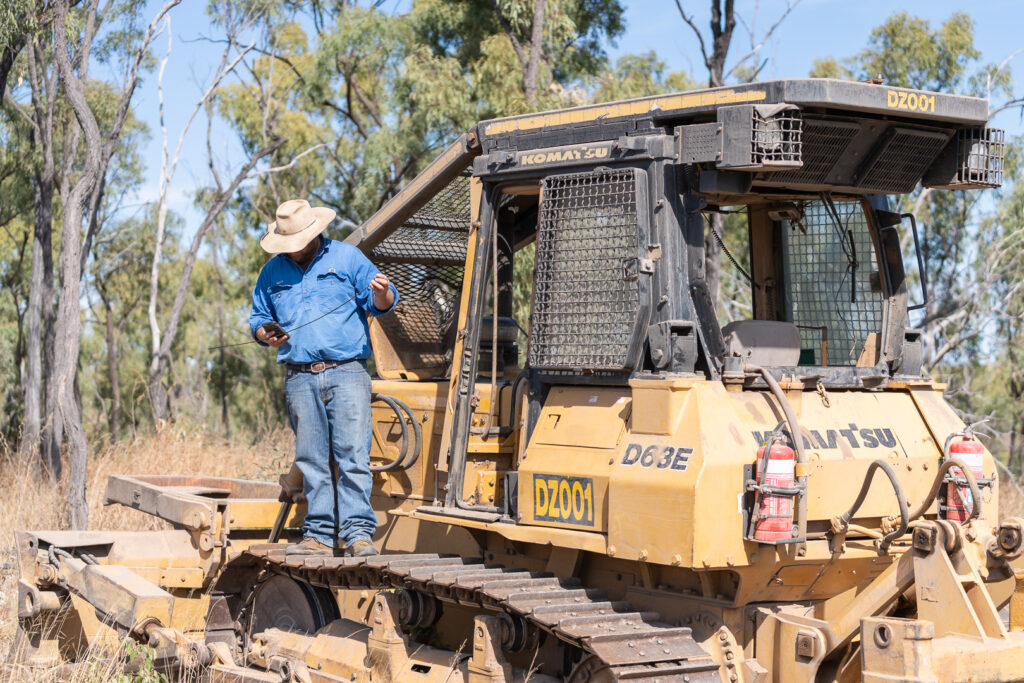
How tech helps in real day-to-day jobs
In the tractor
• Activity plans and rates on your phone.
• You tick off jobs as you go; paddock and spray records update automatically.
• Data syncs when you’re back in coverage.
With livestock
• Record treatments, deaths, and moves in the yards or paddock.
• Mob inventory and history update back in the farm office automatically.
At harvest and in storage
• Yield data shows which parts of the paddock are paying their way.
• Live view of what’s in each silo, plus treatments and movements – less guesswork, better QA.
These are the kinds of real world improvements that turn scepticism into support – because they save time and reduce risk without demanding wholesale change on day one.
A pilot plan you can copy this season
Week 1 – Align
Pick one workflow (e.g. spray diary, lambing treatments, or silo inventory).
Agree on:
• What success looks like (e.g. 20% less time on paperwork, fewer missing records).
• Set a joint go/no go date.
Week 2 – Setup
• Import last season’s records (enough history to feel safe).
• Confirm offline mode works in your actual paddocks.
• Do two short (20 – 45 minute) training sessions in the paddock/yards with phones in hand.
Week 3 – Operate
• Capture jobs on the go.
• Keep paper as backup if it lowers anxiety.
• You act as the super user – answer questions, jot down any concerns.
Week 4 – Review
• Compare time spent, errors avoided, and any input reductions.
• Decide together: stop, tweak, or expand.
If it’s a yes, expand one step at a time:
1. Add grain storage.
2. Then pasture plans and feed budgets.
3. Then broader livestock health and compliance.
4. Build towards a whole farm view over a couple of months, not overnight.
Bringing everyone with you
Change sticks when it feels practical, respectful and proven. Remember, you’re offering tools that protect margins, compliance and family time – and help hand over a stronger, more resilient business.
Keep it grounded:
• Start with shared goals.
• Listen before you pitch.
• Prove it in one paddock or one mob.
• Let the results speak.
Do that, and “talking about farm tech” becomes less of a fight and more of a joint decision about the farm’s future.
Next Steps:
Download our Farm Tech Conversation Checklist and keep a copy on hand to help you through the process.
Ready to see how Phoenix can can work for you and your farming needs? Download a FREE Trial now.
Alternatively, if you have any questions you’d like answered, feel free to contact us here.