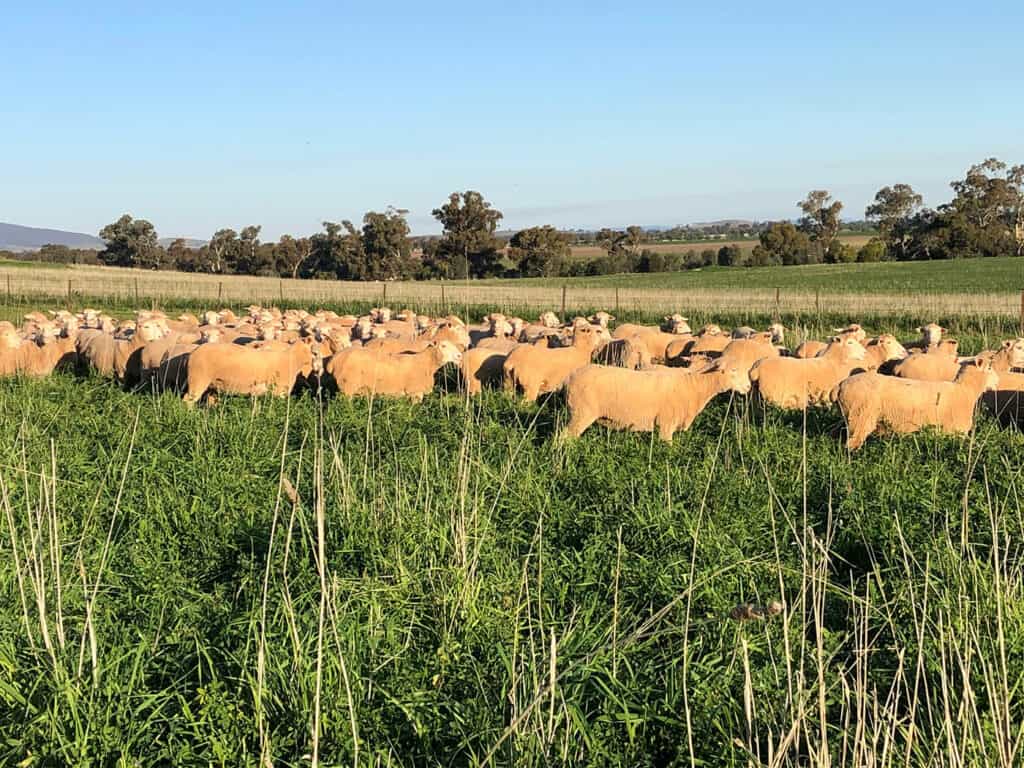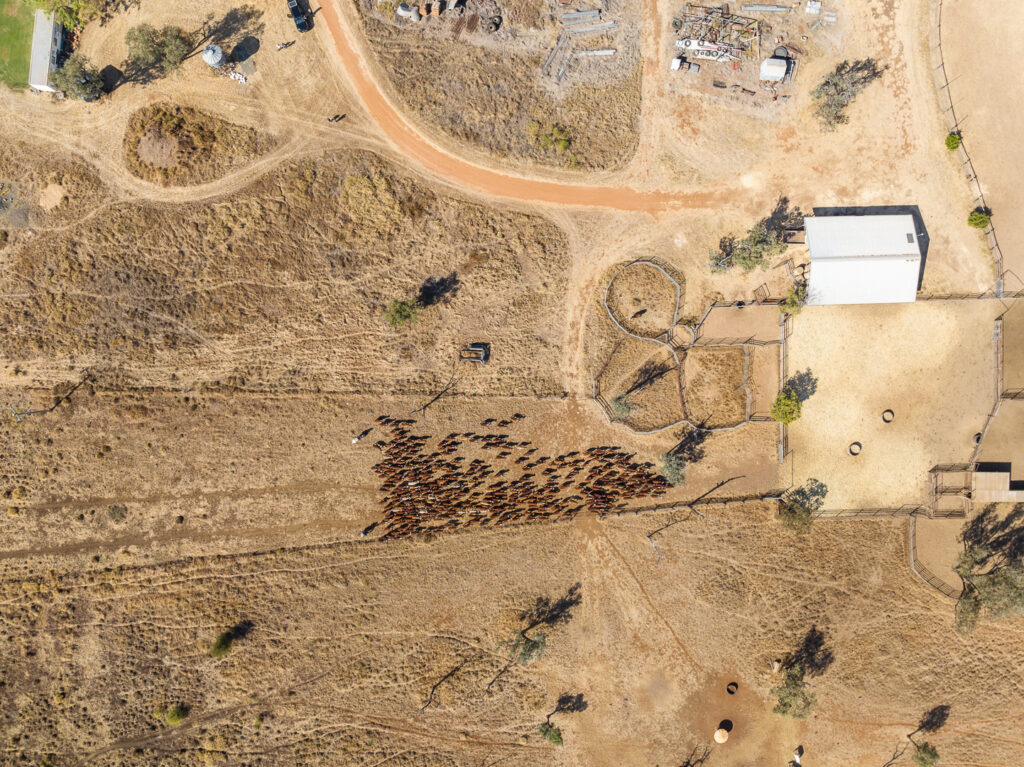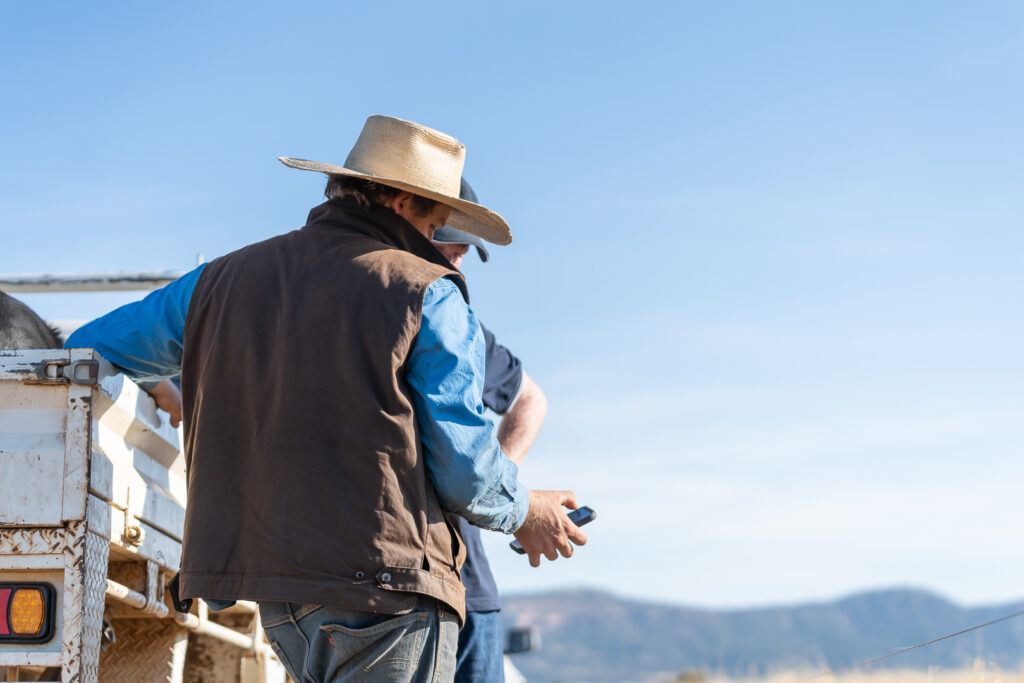
Located in Illabo, NSW, “Allawah” is a 1,040ha property that is owned and run by John and Nicole Hopkins, with seasonal help from their two daughters, Mim and Judy: making this a second and third-generation Australian farming business. Combined with a second property “Moatefield” located just south of Cootamundra, Hopkins Pastoral Company collectively comprises 1,250ha of mixed farming and grazing country.
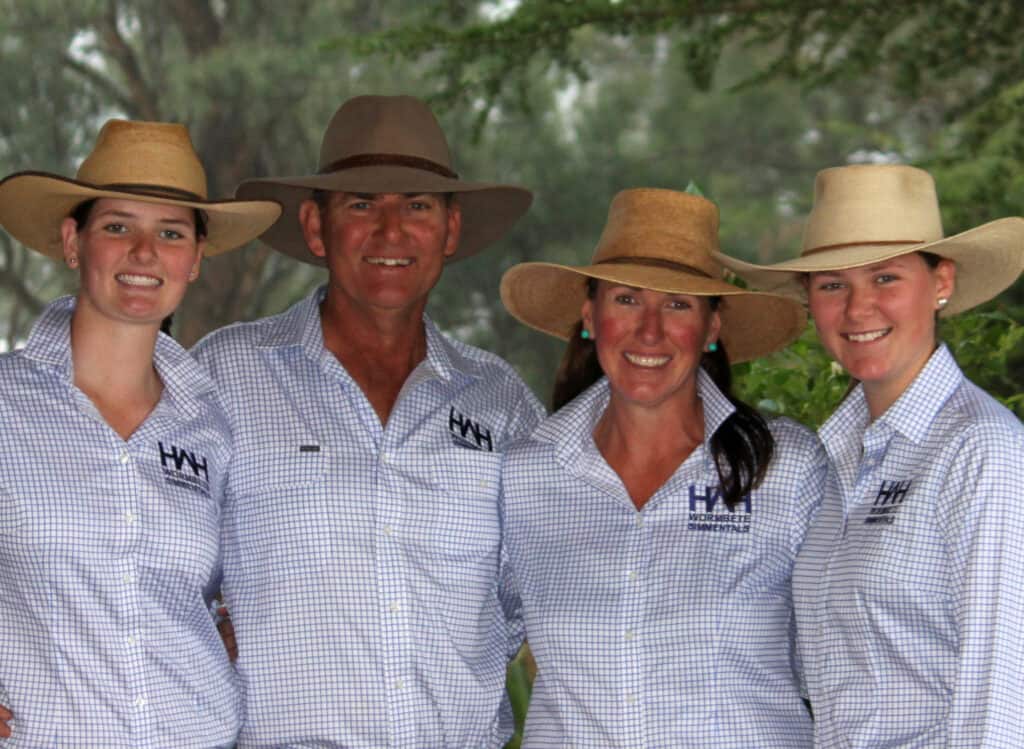
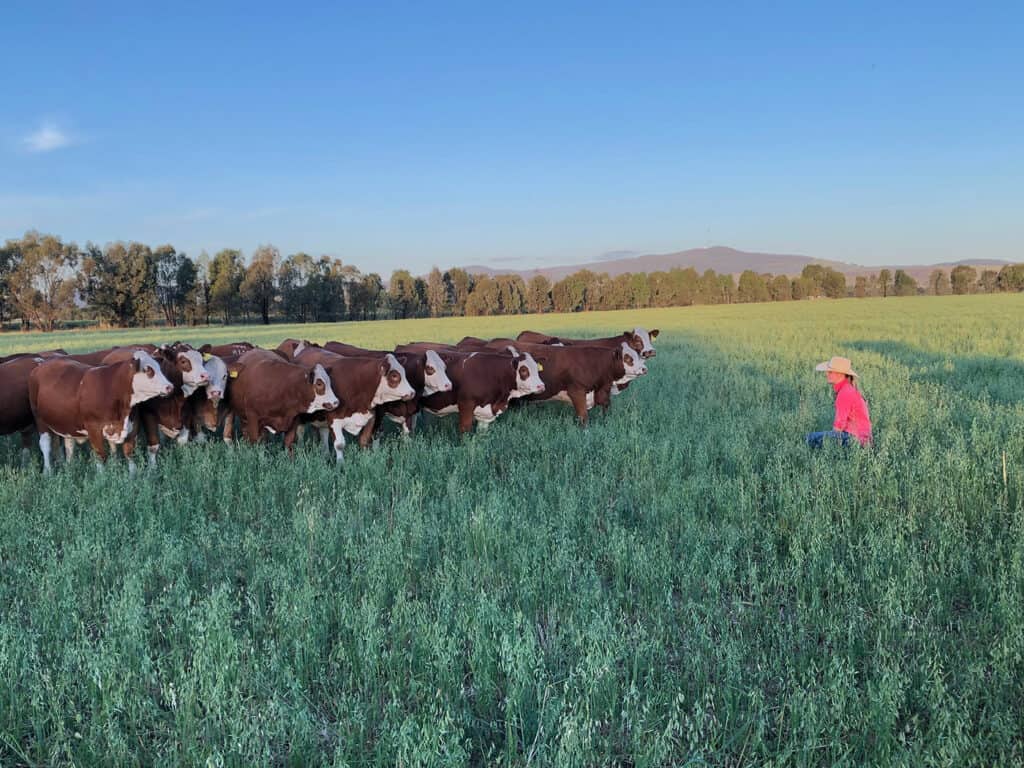
Purchased in 1987 by John’s parents Henry and Judy Hopkins following the relocation of the family’s farming interests from Victoria to New South Wales, “Allawah” is a self-replacing mixed sheep, wool, cattle (Traditional and Black Simmentals), and cropping enterprise that incorporates the cattle seedstock business, Wormbete Simmentals.
A deep-seated love of the land, combined with a desire to enhance the productivity and health of their farming property, has seen the Hopkins develop a long-term focus on sustainable farming initiatives; with steps taken towards implementing farming practices to improve the productivity of pastures and crops, minimise exposure to seasonal risk, enhance natural capital, and become a more sustainable, resilient and financially prosperous farming business for now and the next generation.
As clients of Phoenix since 2007, we spoke with Nicole to understand their motivation behind becoming involved with these sustainable farming initiatives, which organisations and programs they take part in, and the benefits and challenges they have faced during the process.
What organisations are you currently working with for the Sustainable Farming Initiatives research projects?
We are currently working on projects with several organisations, some of which have been ongoing for over 20 years. These include the Sustainable Farms – an initiative of the Australian National University (www.sustainablefarms.org.au), the Farming for the Future Natural Capital Project (www.farmingforthefuture.org.au), and a range of projects over the years with Murrumbidgee Landcare and Local Land Services.
The research projects that have been undertaken include improving farm dam health, surveying local frog species, dung beetles, bird, flora and fauna surveys, soil health, landscape regeneration, extensive tree planting, fencing off remnant vegetation, and establishing stock containment areas.
What was your motivation behind getting involved with these research projects, and how did you become involved with these organisations?
Our motivation has been to protect, enhance, re-establish, and improve the natural assets on our property and improve our overall farm productivity, profitability, and resilience, particularly in these ever-increasing times of climatic uncertainty. For us, these natural assets include our land, soil, water, plants, biodiversity, and fauna; all of which go hand-in-hand to create a sustainable and thriving environment.
Our property has been burnt out twice, first in 1991 and then again in 2006, interspersed with periods of prolonged drought. These catastrophic events brought both a recognition and desire that we needed to implement changes to our management system to bring back balance and build both environmental and economic resilience for the future. We had already done a lot, but we knew we needed to continue the journey we started.
Our journey in this space has been one which has been ongoing for 25 years and has continually evolved and expanded as our knowledge has grown and expanded. Our work initially involved the planting of tree corridors through Landcare and LLS projects, and the fencing off of our main farm dam (stock water supply), and the re-establishment of trees and vegetation in and around this location.
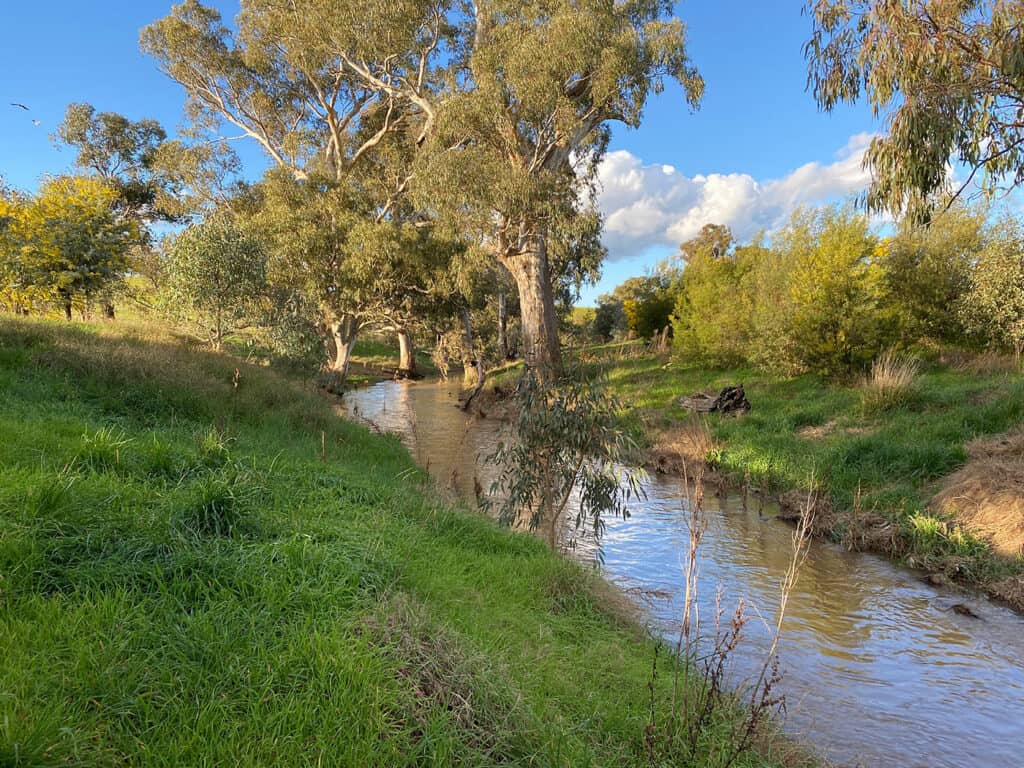
In 2000, “Allawah” became a pilot farm as part of the Sustainable Farms Initiative and since then a multitude of surveys of the natural flora and fauna on the property have been undertaken. This has been a terrific long-term project and has enabled us to build some great relationships with people who are equally passionate about promoting our natural environments, whilst also balancing the need for farming businesses to remain productive and profitable and recognising the benefits of biodiversity in a sustainably functioning farming system.
We became part of the Farming for the Future (FFTF) Natural Capital Project in late 2022. The objective of our involvement in this project is to gain additional knowledge about the value of our natural capital, and the holistic benefits of effectively managing it, and its contribution to our farm productivity. This is an ongoing project, and we’re hoping it will give us a benchmark and understanding of the benefits we’ve gained so far, as well as those we can continue to achieve in the future by investing in our natural capital. Furthermore, we aim to incorporate this investment into our farm management decisions.
Our next step is to gain a better understanding of our soils: what is happening under the ground and how it affects what is happening above the ground. Our soils really are a crucial key, and we’ve found great satisfaction in expanding our knowledge together and witnessing the benefits resulting from changes in our management program. Although there’s still lots of work to be done, we’re excited to see what the future holds.
What benefits have you found specifically for your farming operation with these research projects? Have they led to you implementing changes in your farming operations?
The benefits are endless, but include:
- Improved farm dam water quality which translates to better stock health and production
- Healthy ecosystems in and around areas of natural vegetation
- A variety of birdlife, insect, and native species
- Stock health and improved fertility and weight gain
- Improved soil health and maintaining ground cover
- Reduced use of synthetic fertilisers
- Reduced use of chemicals
- Integrated pest management
- Elimination of fungicides in our cropping program
- Improved mental health and well-being
- Our property looks better and feels better – both to be working in, and in the knowledge that what we’ve been working on for the past two decades is showing positive benefits
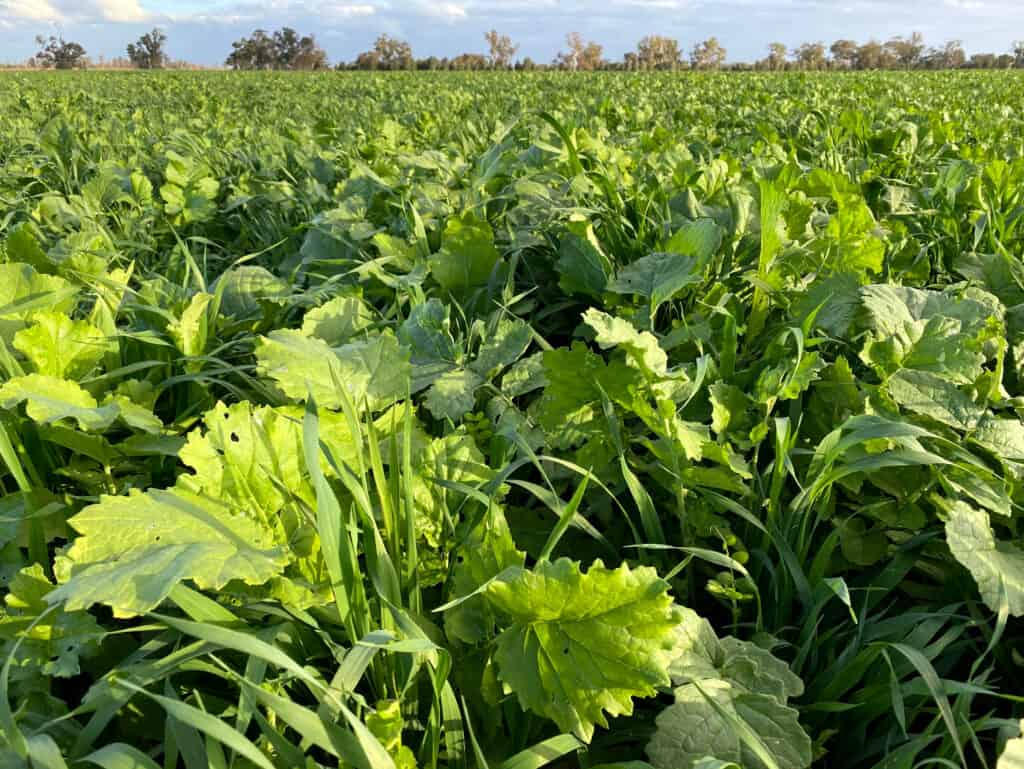
Some benefits are hard to measure, but we know they are there. Simple things like maintaining ground cover, re-establishing pastures, multi-species cover cropping, reducing input costs, and reducing exposure to risk are all motivators to keep moving forward. We’re not out there advocating for total change – we are just taking the parts that work for us and implementing them into our sustainable farming initiatives program.
Absolutely, the benefits are motivating us to make further change and to keep learning and growing. By better managing our land, soil, and water we have seen benefits that provide us with the reassurance and knowledge that our property is more healthy, productive, resilient, and economically strong. The benefit of improved mental well-being is an added bonus.
For us “sustainability” and “regeneration” is not about just saying you are “doing something” or making emotive and bold statements; it’s about actually demonstrating that the changes you are making are bringing positive benefits and seeing first-hand the benefits of that change. Knowing that what we bring to the sustainable agriculture conversation is delivering proven long-term agricultural, environmental, economic, and social benefits is a key motivator to continue. Small steps collectively bring big steps.
Have you encountered any challenges? If yes, what?
Yes, as most broad-scale Australian farmers have experienced at some point in time, seasonal uncertainty including drought and everything that comes with it has provided huge challenges. Additionally, improving necessary infrastructure to support what we’re doing, and the financial commitment associated with this has been a big challenge. Everything we have done to date involves careful planning and sometimes learning from mistakes. We are not perfect, but we know the changes we are making will bring us rewards for the long term, both for production, resilience, and profitability. But the benefits far outweigh the challenges along the way.
Have you used Phoenix by AGDATA to keep track of information related to these research projects? If so, how?
We utilise Phoenix Financials Pro which includes the Financials, Budgets, and Payroll modules. Phoenix has been used to provide financial and livestock sales data for many of the sustainable farming initiatives projects. It gives us information on the tangible benefits of where changes to our management system have improved our profitability. We also use Phoenix to keep track of the budget allocated to projects and for our Payroll. We have always completed our BAS monthly and find this is a crucial way to keep wholly abreast of our financial position. It keeps our finger on our financial pulse and we can make informed and up-to-date decisions and provide information that is always current and relevant.
We couldn’t imagine ever changing to another financial software or payroll program. We know Phoenix by AGDATA and we rely on it.