Farming is a crucial component of Australia’s society, being both a major economic driver and the lifeblood of our regional and rural communities. However, the agricultural sector also poses inherent risks and is a significant contributor to workplace health and safety accidents each year. In fact, Safe Work Australia considers agriculture to be one of the most dangerous industries to work in, making farm safety on Australian farms a top priority. So, what can you do to cultivate farm safety on your farm and ensure everyone gets home safely at the end of each workday? Let’s look at some of the statistics and opportunities below.
Download a copy of our our Farm Safety Checklist here.
The State of Farm Safety in Australia
As all Australian farmers would know, Australia’s agricultural landscape presents unique challenges and dangers. Those who work alone or in remote locations are at an even greater risk. Tractor rollovers, machinery-related incidents, and quad bike accidents cause over 75% of workplace deaths. Other leading causes are animal-related injuries, such as being struck by an animal (usually cattle) and falling from a horse.
According to recent statistics from the Safer Farms 2025 Agricultural Injury and Fatality Trend Reports by Farmsafe Australia, 2023 saw the most significant decrease in on-farm fatalities on record, down to 32 deaths in 2023 from 55 deaths in 2022. However, tragically 2024 saw this trend reverse with 72 deaths on Australian farms – the highest number of fatalities in two decades. 87.5% of fatalities were male, with 63% of fatalities being people aged over 45 years old and 15% of fatalities attributed to children under 15 years of age. Furthermore, 60% of the reported farm injuries were attributed to quad bikes and tractors (responsible for 18 deaths in total in 2024), with 75% of injuries occurring in Queensland and New South Wales. This is a statistic that no one wants to see; even one fatality is too many in the agricultural industry.
Key Farm Safety Practices, Resources, Training, and Legal Compliance
Whether you own, manage, or work on a farm, having a culture of farm safety is critical to ensure everything runs smoothly, that risks are eliminated or carefully mitigated, and everyone gets home safely at the end of each workday.
It’s never too late to adopt, promote, and implement key safety practices. Investing in and providing the necessary training and resources, such as ensuring proper training for machinery operation, first aid courses and emergency response planning, can all empower farmers and farmworkers with the knowledge and skills needed to mitigate risks effectively. Farmers can also take steps towards a safer working environment by wearing seatbelts in farm vehicles, wearing helmets while riding motorbikes and quad bikes, using personal protective equipment (PPE), and regularly undertaking equipment maintenance.
Farmsafe Australia offers a range of resources on their website, including ‘A Practical Guide: Risk Management Tools.’ This guide outlines a 4-step risk management process whereby you identify hazards, assess risks, control risks, and review control measures. Like budgeting, risk management is not a one-time event but an ongoing process that should be reviewed and updated regularly. Additional resources on safety, toolbox talks, industry reports, and emergency planning information can be found on the Farmsafe Australia website resources section.
Understanding and complying with relevant safety regulations is also imperative. Farmers often grow up on the land, learning as they go from their parents, grandparents, or fellow workers, sometimes witnessing or being taught unsafe practices and having a ‘she’ll be right’ attitude. However, this leaves you open to placing yourself, your family, and your employees at a high level of risk and neglecting your legal obligations of providing a safe place to work.
Government agencies, such as Safe Work Australia, provide guidelines and resources to assist in meeting legal obligations. Regular safety audits and inspections can help ensure that farms adhere to these regulations, creating a safer working environment for everyone involved.
We know that no two farms are the same and each faces its own challenges. By taking the time to understand the information available to you, you can then customise it to suit your operations and ensure you are protecting your most valuable assets – your health, the wellbeing of your workers, and the sustainability of your farm.
Building a Safety Culture on the Farm
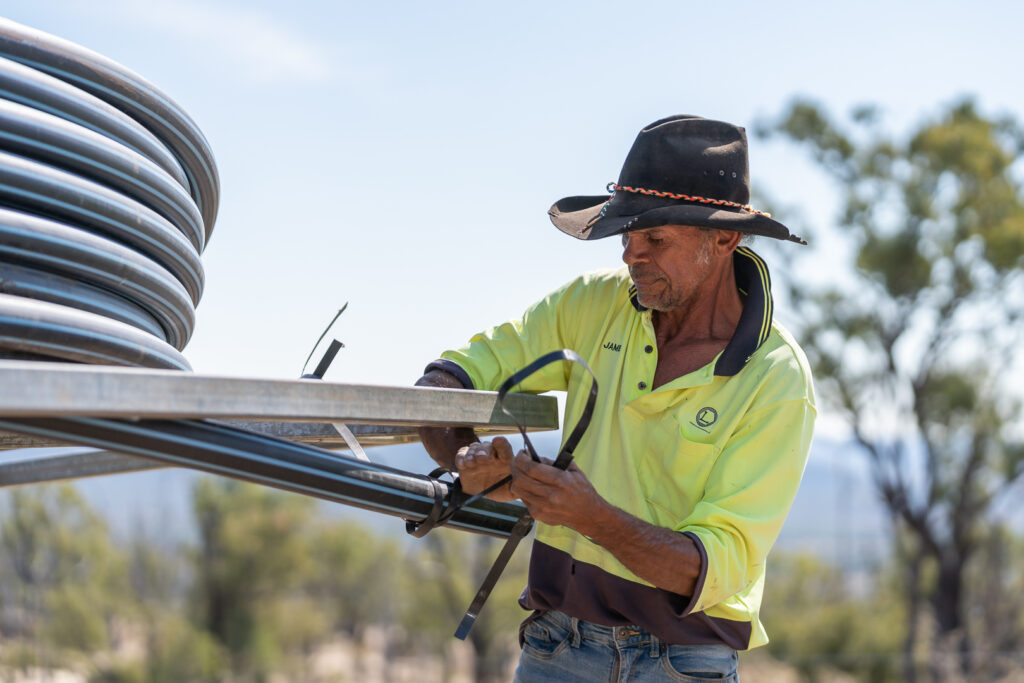
Cultivating a safety-conscious environment requires the active participation of everyone on the farm, including owners, managers, and workers. We know there’s never enough time in the day to get everything done on the farm. However, this doesn’t mean safety should be put at the back of your mind to ‘get to it’ when you can.
A positive safety culture is founded on mutual respect, open communication, and continuous education. You may not realise it, but your actions, behaviours, and how you prioritise the safety, health, and wellbeing of all those who work with or around you are shaping the workplace culture on your farm; it starts with leadership setting clear examples and demonstrating a genuine commitment. Every farmer can embrace farm safety and do their part to embed a safety culture by incorporating safer habits into their daily routines.
Prioritise safety, health, and wellbeing by encouraging open communication, actively listening to concerns, conducting regular safety check-ins, and establishing protocols for emergency situations. Safety is the collective responsibility of all on the farm, including employees. By ensuring everyone takes accountability, farmers can work towards significantly reducing or preventing the number of accidents on their properties.
Technology Advancements in Farm Safety
Advancements in technology play a pivotal role in enhancing farm safety. Whilst you can’t physically be everywhere at once to keep an eye on things, Phoenix by AGDATA has some tools that can assist you to meet your OH&S and Duty of care responsibilities.
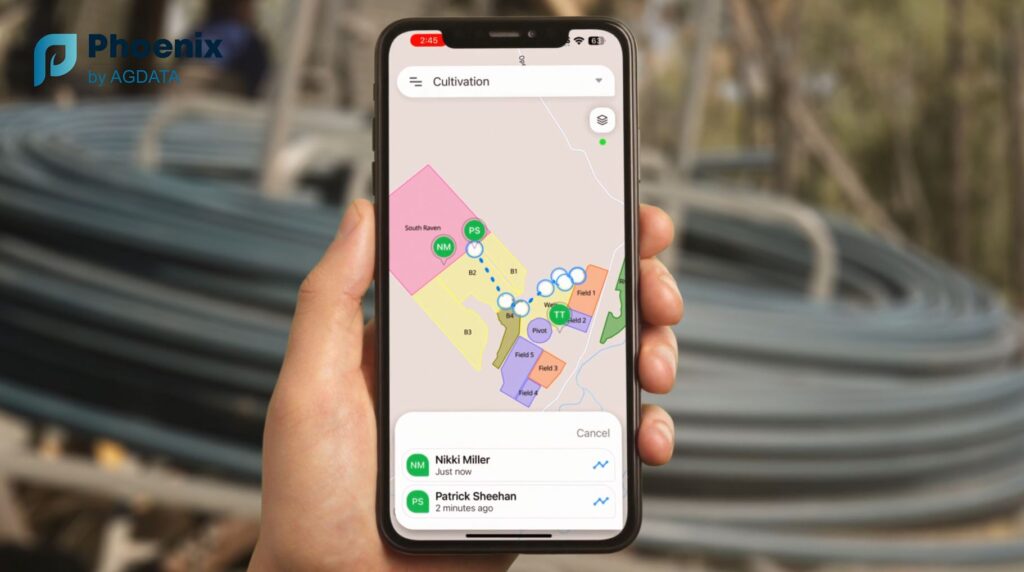
Phoenix’s Staff Location feature via the Phoenix App uses dynamic personnel tracking, enabling you to monitor your team’s activities, whether they’re active, online, or stationed in one place for extended periods. This assists you to prioritise your workers safety with constant vigilance, allowing you to identify when someone is offline and actively monitor their safety. The feature uses ‘breadcrumbs’ that drop location points based on a team member’s location on the property, allowing their movements to be tracked from point-to-point over a set period. It will also enable you to coordinate personnel and equipment movements and visualise recent history to manage future farming events and machine operations.
In addition, the Phoenix Tasks feature is key in facilitating your farm’s safety. As the name suggests, Phoenix Tasks enables you to create one-time and recurring work orders with the ability to assign staff and track their progress. You can geo-locate tasks on a map for quick and accurate reference to the exact location, attach photos and files, and make comments. This feature plays an important role in worker safety by providing real-time alerts to workers of current and potential hazards.
In conclusion, prioritising farm safety in Australia is not just a legal obligation but a moral imperative. The statistics highlight the need for proactive measures if we are to reduce accidents and fatalities in the agricultural sector. Embracing technology like the Staff Location and Tasks features offered by Phoenix by AGDATA, along with fostering a safety-conscious culture and complying with regulations, can collectively contribute to making Australian farms safer spaces for everyone. Let’s lead the charge into a more responsible and successful farming future by cultivating farm safety on Australian farms and ensure everyone makes it home safely.